
Air vs Coil Suspension Forks: Cost, Weight and Trail Use Compared for Buyers
Short answer: air and coil suspension forks do the same job with different springs. Coil spring forks are the cost-effective option; air spring forks are the lightweight option. Trail use then sets travel, with short travel for XC cross-country and long travel for downhill. Whichever spring type you choose, the fork still has to be specified by four core parameters — travel, stanchion diameter, wheel size and damper type — and checked against the frame, axle and brake mount before ordering.
This comparison is written for buyers who have already moved past discovery and are now evaluating what to put on a bike, into a catalogue or into an assembly programme. It separates what can be verified in a specification sheet from what is simply a spring-type preference, and it keeps the decision anchored to the four parameters that determine fit.
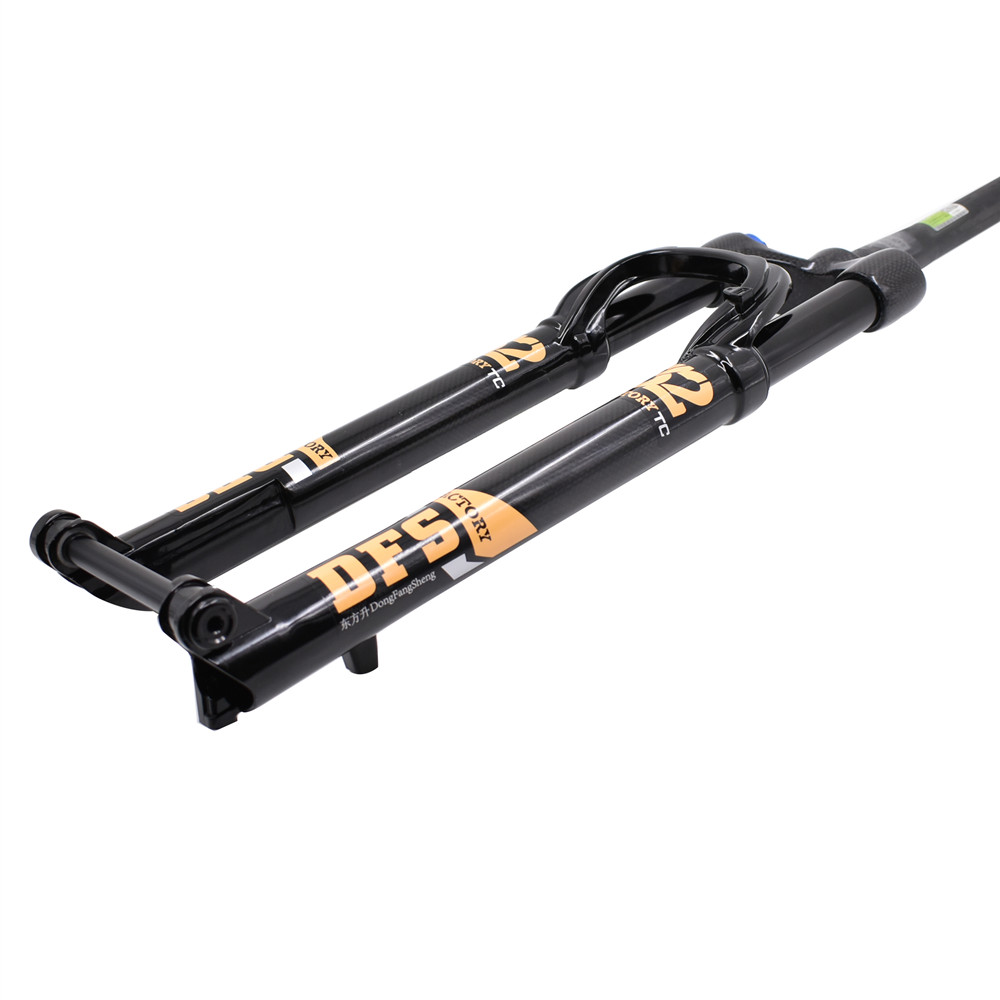
A carbon air suspension fork built for XC use: air spring, 32 mm stanchions and a remote-controlled hydraulic lockout.
Problem definition: why the air-versus-coil question is not the whole decision
An air spring or a coil spring supports the rider's weight and absorbs impacts at the front wheel, while a hydraulic damper controls how quickly the fork compresses and returns. What changes between the two designs is the spring element itself, and that single change affects weight, cost position, the setup routine and how the fork behaves as travel increases.
For a buyer, spring type is one line in a longer specification. A fork also has to state travel, stanchion diameter, wheel size, damper type, axle standard, steerer dimensions and brake mount. A fork can be correct on spring type and still not fit the bike.
Common buying mistakes in this category:
- Choosing coil because it is the cheaper spring type, then adding the mass back elsewhere on the build.
- Choosing air because it is lighter, then paying more than the frame it will be mounted on.
- Ordering a travel figure that does not match the frame's intended riding category.
- Matching the model name but not the axle, steerer or brake-mount interface.
- Leaving test documentation for the destination market until after tooling and mass production.
Industry background: market scale and the compliance layer
Bicycle suspension systems — forks and rear shock absorbers — represented a global market of USD 0.81 billion in 2025, according to Mordor Intelligence's bicycle suspension system market size and growth report published in 2026. Within the fork category, carbon fiber forks were reported at 25% of global market share in 2024 by Wakidinfbikes industry news. For trade and customs purposes, bicycle front forks fall under HS code 8714.91.
Compliance matters as much as market scale. The U.S. Consumer Product Safety Commission's summary of bicycle standards records that ASTM, EN and ISO frameworks each contain suspension-fork requirements, including tyre-clearance testing, while the details vary by standard and by bicycle-use condition. The same summary does not establish equivalence between the frameworks, so a report written against one standard cannot be assumed to satisfy another.
DFS TECH (SHENZHEN) CO.,LTD. is a Shenzhen-based manufacturer of mountain bike suspension forks, established in 2009 and operating the independent brands DFS, CIVET and ROLL. The company develops and produces air suspension forks for XC cross-country and AM all-mountain categories in aluminium alloy and carbon fiber versions, with quick-release, standard thru-axle and BOOST thru-axle options, travel from 100 mm to 150 mm, and compatibility with 20, 24, 26, 27.5-inch, 29-inch and 32-inch mountain bike frames. Its forks support lockout, rebound adjustment, and high-speed and low-speed compression damping adjustment.
Cost: what actually drives the gap between air and coil forks
Coil is the cost-effective spring type; air is the lightweight one. That is the starting point, and it holds for most sourcing projects. The gap itself comes from part count and process rather than from brand positioning.
An air fork carries parts a coil spring does not need: a sealed air chamber, an air piston and seals, plus tighter tolerances to hold pressure. It also adds a step both at the end of the production line and at the customer end, because air pressure has to be set with a suspension pump to match the rider, the frame, the wheel size and the terrain.
Material choice can move unit cost more than spring type does. Lower legs, crown and steerer can be carbon composite or aluminium alloy. The DFS XC reference fork uses carbon composite lower legs and crown with a carbon steerer, which places it at the higher end of a manufacturer's own range, while the same air-spring architecture in alloy sits lower. Buyers comparing two air forks inside one catalogue are usually comparing material and damper specification, not spring type.
Volume and customization then set the final number:
- Minimum order quantity: 2000 pcs.
- Monthly capacity: 3000 units.
- Lead time: 30–120 days, depending on the depth of customization.
- Customization scope: logo, material, surface finish, travel, axle specification, brake mount and packaging.
- Warranty: 2 years with remote guidance.
This article does not publish price bands. Per-unit price for a suspension fork depends on configuration, order quantity, finish and the market documentation required, and it should be confirmed by quotation against a fixed specification.
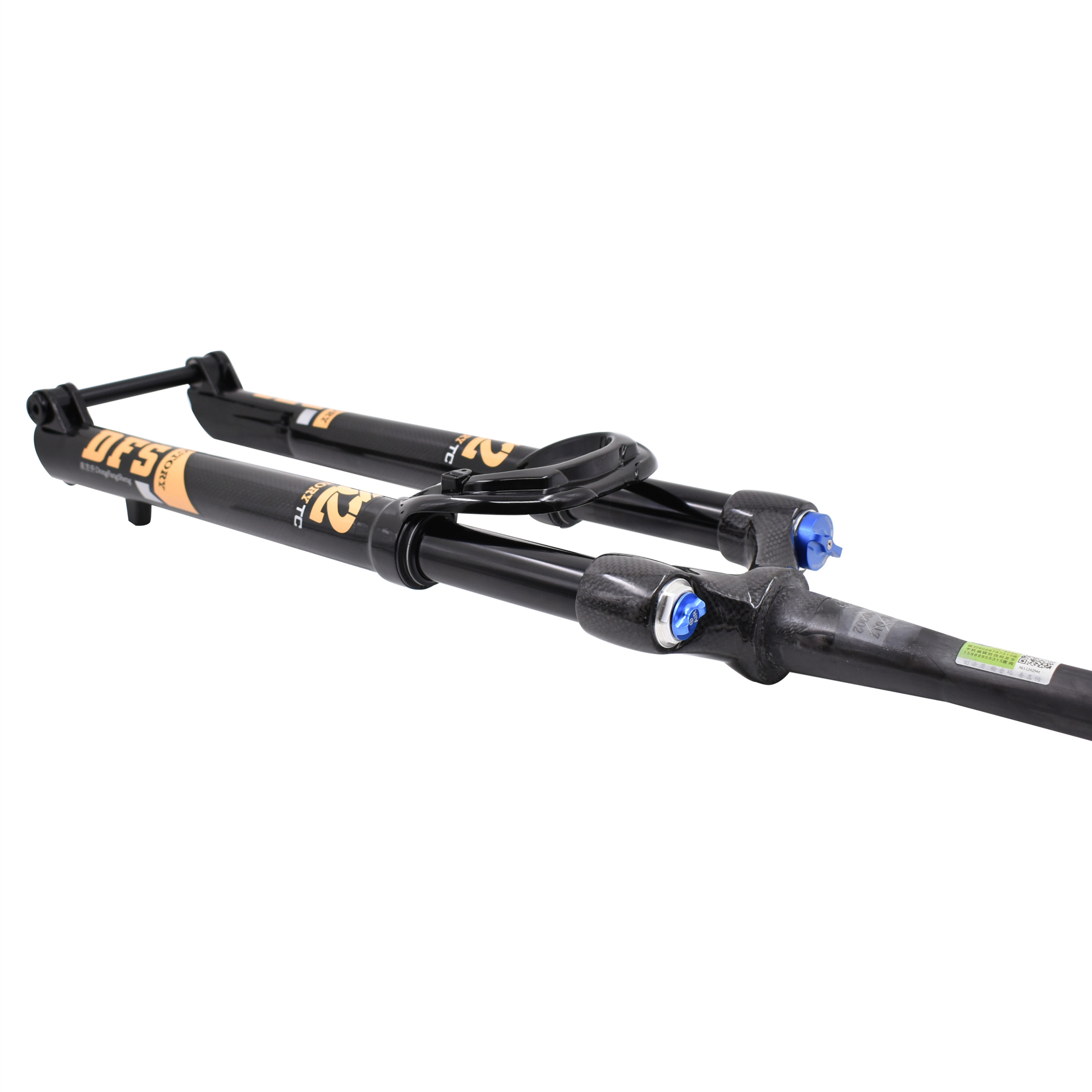
Lower legs, crown and stanchion detail: material choice moves unit cost more than spring type does.
Weight: where the air spring earns its place
Air forks are the lightweight option because the spring force comes from compressed air rather than from a metal coil, which removes the coil's mass from the assembly. The DFS-RLC-TP-RCE-TC-BOOST-15X110 shows what that means in a real specification: 100 mm travel, 29-inch wheel, 32 mm AL 7050 hard-anodized stanchions, carbon composite lower legs and crown, a carbon tapered steerer from 39.8 mm to 28.6 mm, and a total weight of 1.35 kg.
Coil forks are generally heavier at the same travel because the spring itself is a metal coil. Whether that matters depends on the build. On an XC race bike, where the rider repeats accelerations and climbs, mass at the front wheel is a direct cost. On a long-travel bike, the same added mass is a smaller share of total weight and is often accepted in exchange for the cost-effectiveness of the coil spring type and a simpler service routine.
Where weight stops being the deciding factor
Weight is a priority for XC use and climbing-heavy builds, and a secondary one where travel is long and terrain is technical. Buyers should decide which category their project sits in before comparing fork weights, because a 100 mm XC fork and a 150 mm all-mountain fork are not interchangeable even when both are air sprung. The reference DFS air fork also carries a coil plus MCU negative spring, which shows that an air fork is not a coil-free fork — the spring type that defines the category is the main spring.
Trail use: short travel for XC, long travel for downhill
Travel should follow the riding category. Short travel suits XC cross-country; long travel suits downhill. DFS covers 100 mm to 150 mm across its XC and AM range, which keeps most trail, XC and all-mountain builds on comparable specifications while treating long-travel applications as a separate load case.
Travel also changes what the fork has to survive, which is why the compliance conversation belongs in the same decision as spring type. ASTM F2274-11(2024) establishes performance requirements and associated test methods for production suspension and non-suspension forks intended for Condition 3 terrain, and ASTM F2273-11 defines mechanical test methods covering compression load, bending load, impact resistance and bending fatigue life.
The four core selection parameters
Four parameters decide whether a specific suspension fork is the right fork: travel, stanchion diameter, wheel size and damper type. Spring type is a fifth decision that sits on top of these; it does not replace them.
| Parameter | What it controls | Verified DFS reference |
|---|---|---|
| Travel | Ride category and how much impact the front end absorbs; short travel for XC cross-country, long travel for downhill | 100 mm on DFS-RLC-TP-RCE-TC-BOOST-15X110; DFS range 100–150 mm across XC and AM |
| Stanchion diameter | Front-end stiffness and the load the fork is built to carry at a given travel | 32 mm, AL 7050 aluminium construction, hard-anodized surface |
| Wheel size | Compatibility with the frame and wheelset | 29-inch on the reference model; DFS offers compatibility with 20, 24, 26, 27.5-inch, 29-inch and 32-inch frames |
| Damper type | Control of compression and rebound, and whether the fork can be locked out while riding | Remote-controlled hydraulic lockout with compression adjustment; rebound damping adjustable through a hydraulic circuit |
| Fit check (axle, steerer, brake mount) | Whether the fork physically fits the frame | 15 × 110 mm thru axle; carbon tapered steerer 39.8 mm–28.6 mm; post disc mounts |
Table 1. The four core selection parameters, with verified values from the DFS carbon air fork specification.
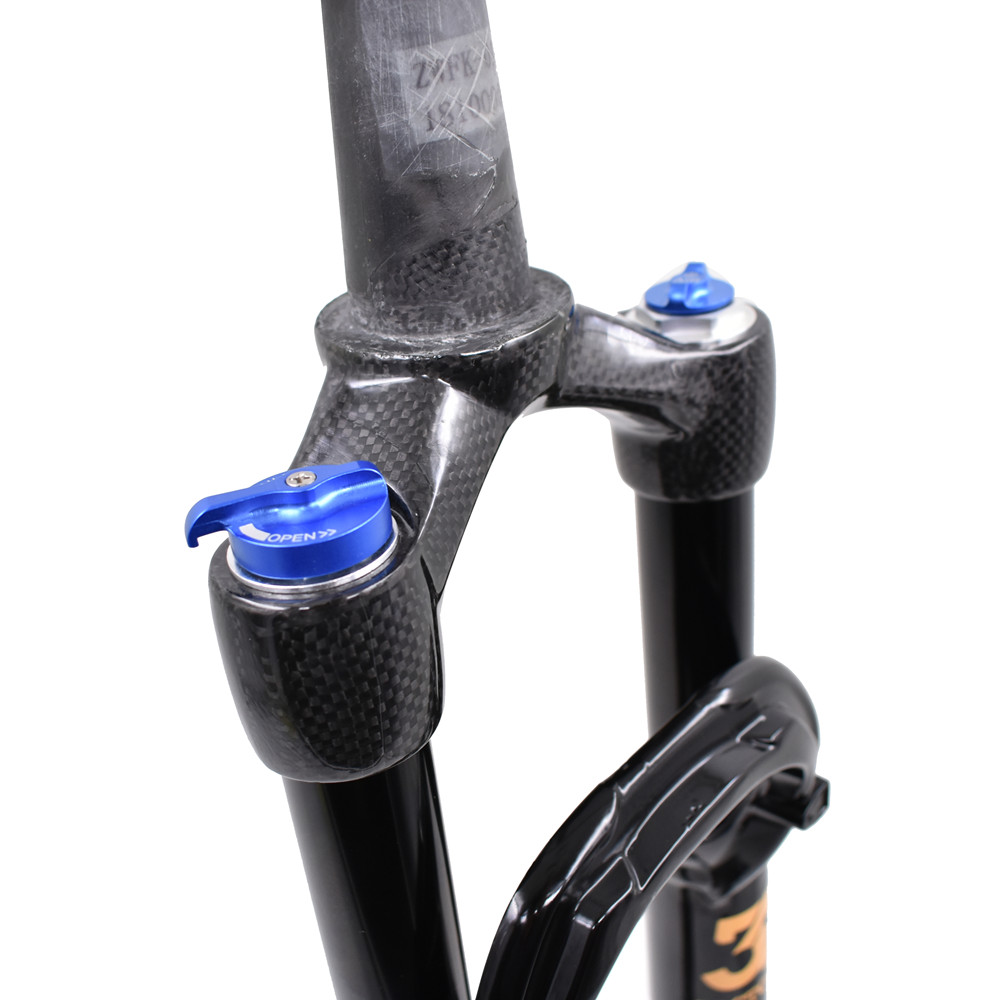
Stanchion diameter, travel and damper type are specified together — not chosen independently.
Air versus coil, compared on the buyer's side of the table
| Decision factor | Air-spring fork | Coil-spring fork |
|---|---|---|
| Spring element | Adjustable air spring as the main spring (the DFS reference fork uses a coil + MCU negative spring alongside it) | Metal coil spring |
| Stated advantage | Lightweight | Cost-effective |
| Weight at the same travel | Lightweight construction; the DFS carbon XC air fork weighs 1.35 kg at 100 mm travel | Generally higher un-sprung spring mass, because the spring is a metal coil |
| Setup routine | Air pressure must be set with a suspension pump to match rider, frame, wheel size and terrain | Spring rate is fixed by the specification; no air-pressure routine |
| Typical trail use | XC cross-country and trail, usually short travel | Cost-sensitive builds and long-travel use, where travel runs longer |
| Cost drivers | Sealed air chamber, air piston, seals, tighter tolerances, plus carbon-versus-alloy material choice | Fewer parts in the spring system itself |
| Commercial terms (DFS) | MOQ 2000 pcs; monthly capacity 3000 units; lead time 30–120 days; 2-year warranty with remote guidance; 100% test | |
Table 2. Air versus coil suspension forks across the factors buyers actually trade off.
Step-by-step: how to specify an air or coil fork
- Define the riding category first. Short travel for XC cross-country, long travel for downhill. This single decision removes most unsuitable options before any price discussion starts.
- Fix the fit dimensions. Wheel size, front axle standard (the DFS reference model uses a 15 × 110 mm thru axle), steerer dimensions (carbon tapered 39.8 mm–28.6 mm) and the brake mount (post disc mounts). A mismatch here ends the project regardless of spring type.
- Set the front-end load case. Stanchion diameter carries the load: the reference fork uses 32 mm AL 7050 hard-anodized stanchions, which should be read together with travel rather than on its own.
- Choose spring type by priority. If cost position leads the project, coil is the cost-effective type. If front-end mass leads, air is the lightweight type.
- Specify the damper. The reference specification uses a remote-controlled hydraulic lockout with compression adjustment and rebound damping adjustable through a hydraulic circuit — a lockout is useful for climbing and smooth transfer sections, while rebound adjustment sets how the fork returns.
- Confirm the destination-market documentation. Match the test standard and edition to the market before tooling, not after (see the compliance table below).
- Confirm commercial terms. MOQ 2000 pcs, lead time 30–120 days depending on customization, monthly capacity 3000 units, 2-year warranty and 100% test.
- Validate a sample. Check travel, axle, steerer, brake mount and air-pressure setup against the actual frame and rider before committing to a production run.
Use cases: matching spring type and travel to the programme
XC race and short-travel builds
Air spring, short travel, low mass. The DFS carbon XC air fork is specified at 100 mm travel and 1.35 kg with carbon composite lower legs and crown, a carbon steerer and a remote-controlled hydraulic lockout with compression adjustment. For a race bike where every acceleration repeats, this is the configuration where the air spring's weight advantage is largest.
Trail and all-mountain builds
Air spring, longer travel, more adjustment. DFS covers 100 mm to 150 mm travel for XC and AM categories, with lockout, rebound adjustment and high- and low-speed compression damping adjustment. Buyers in this bracket usually keep the air spring but move up in travel and add compression adjustment instead of changing the spring type.
Long-travel and downhill applications
Long travel suits downhill, and this is the category where the coil spring's cost-effectiveness is weighted most heavily against the air spring's lower weight. Whatever the spring type, forks used on rough, unsupported terrain should be specified against the load case in the relevant standard — ASTM F2274-11(2024) is written for production forks used in Condition 3 terrain.
OEM and private-label programmes
For manufacturers, the spring decision is made once per model and then repeated across thousands of units. DFS has supplied bicycle OEM/ODM clients in Germany, Argentina and South Korea with 10,000 units over a three-year relationship, including custom colours and logo printing through its paint shop. Customization for air fork programmes covers logo, material, surface finish, travel, axle specification, brake mount and packaging, against a minimum order of 2000 pcs.
Compliance and documents: what to ask for before tooling
A suspension fork specification without a test standard is incomplete, and the standard cannot be inferred from the words "mountain bike fork". Ask for the standard, the edition and the report number.
| Framework | Scope relevant to suspension forks | Where it applies |
|---|---|---|
| EN 14766:2005 | The standard the DFS bicycle suspension fork is certified to; the certification applies to the EU market. Intertek Test Report number SZHH00332353. | EU |
| ASTM F2274-11(2024) | Performance requirements and associated test methods for production suspension and non-suspension forks intended for Condition 3 terrain. | US voluntary standards |
| ASTM F2273-11 | Mechanical test methods for bicycle forks: compression load, bending load, impact resistance and bending fatigue life. | US voluntary standards |
| ISO 4210-6:2023 | Frame and fork test methods, including suspension-fork tyre clearance, front-fork tensile strength, static bending, rearward impact, bending fatigue with impact, and forks for hub or disc brakes. | International |
Table 3. Fork-relevant standards a buyer can ask a supplier to document.
Edition control matters: the official ASTM page identifies a 2024 revision of F2274, while the CPSC standards listing shows an earlier displayed edition. When a compliance file is built for a specific market, confirm which edition applies to the report being reviewed, and treat ASTM, EN and ISO test categories as related but not automatically interchangeable.
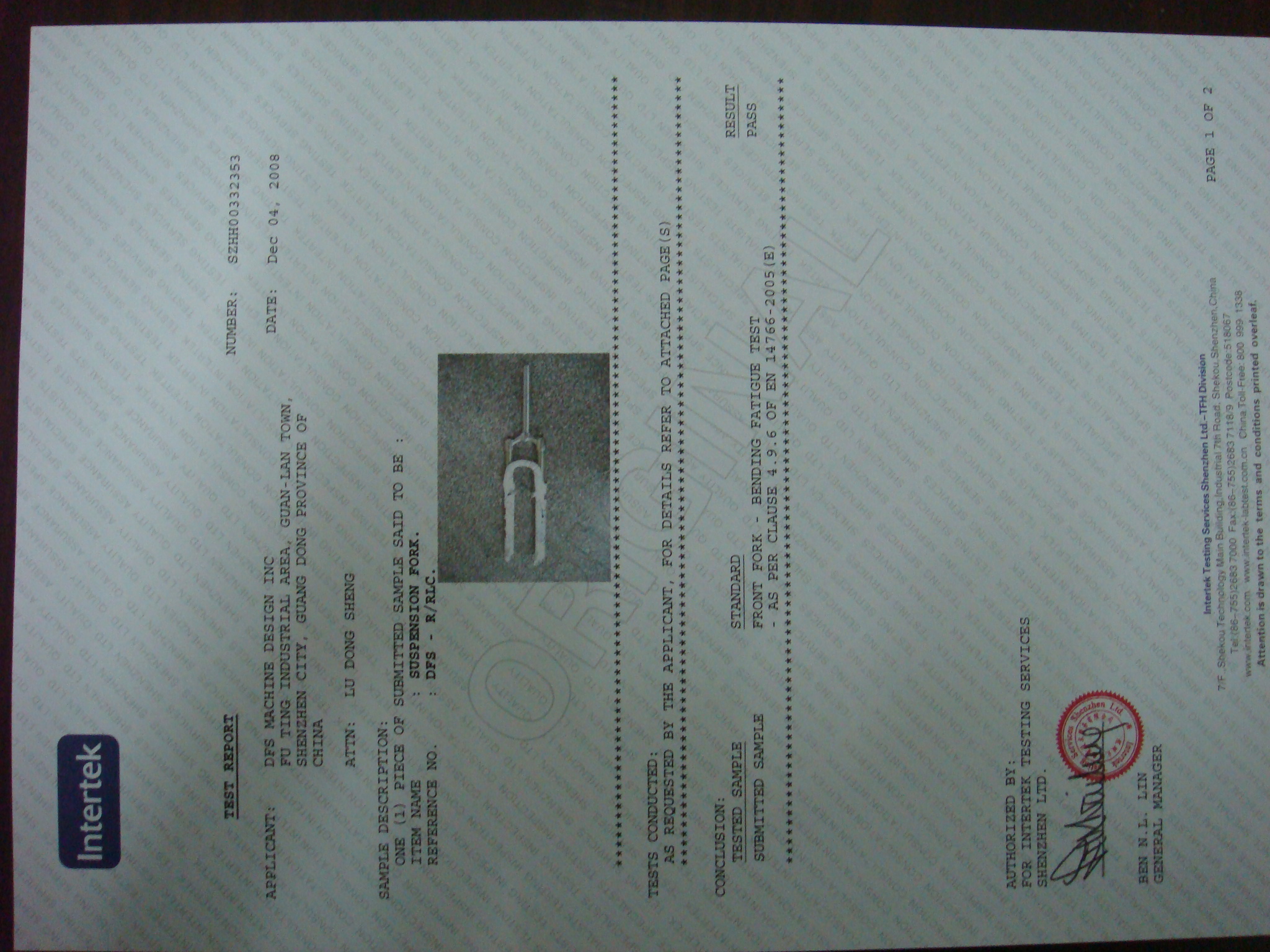
Intertek test report SZHH00332353 for the DFS bicycle suspension fork, against EN 14766:2005.
FAQ: air vs coil suspension forks for buyers
Which standards should a China-made MTB air suspension fork be tested against for the EU market?
For the EU market, the applicable EN standard is the starting point: the DFS bicycle suspension fork is certified to EN 14766:2005, covered by Intertek Test Report number SZHH00332353. EN is not the only framework in play. ASTM F2274-11(2024) sets performance requirements and test methods for production suspension and non-suspension forks used in Condition 3 terrain; ASTM F2273-11 covers compression load, bending load, impact resistance and bending fatigue life; and ISO 4210-6:2023 includes suspension-fork tyre-clearance, front-fork tensile, static bending, rearward impact and bending-fatigue test methods. The U.S. Consumer Product Safety Commission notes that ASTM, EN and ISO suspension-fork requirements differ in detail and are not automatically interchangeable, so the required standard and edition should be written into the purchase specification rather than assumed.
Which four parameters decide whether an air or coil suspension fork fits the bike?
Four parameters decide the specification: travel, stanchion diameter, wheel size and damper type, with spring type chosen on top of them. On the DFS-RLC-TP-RCE-TC-BOOST-15X110 those parameters read as 100 mm travel, 32 mm AL 7050 hard-anodized stanchions, a 29-inch wheel and a hydraulic damper with remote-controlled lockout, compression adjustment and rebound adjustment. Fit dimensions must be confirmed separately: a 15 × 110 mm thru axle, a carbon tapered steerer from 39.8 mm to 28.6 mm, and post disc mounts. Short travel suits XC cross-country and long travel suits downhill.
What drives the cost difference between air and coil forks, and what are the order terms?
Coil spring forks are the cost-effective option and air spring forks are the lightweight option. The air design carries parts a coil fork does not need, including a sealed air chamber, an air piston and seals, plus a suspension pump for pressure setup. Material choice moves cost again, because lower legs, crown and steerer can be carbon composite or aluminium alloy. For DFS air suspension forks, minimum order quantity is 2000 pcs, monthly capacity is 3000 units, and lead time runs from 30 to 120 days depending on customization — logo, material, surface finish, travel, axle specification, brake mount and packaging. Unit price is confirmed by quotation against a fixed specification.
How are suspension forks tested before shipment?
Quality control runs from the beginning to the end of production, and every fork is fully assembled and carefully tested before it is packed. Stated test coverage is 100% of production, and DFS provides a 2-year warranty with remote guidance for after-sales support. For a buyer validating a new specification, that testing sequence is also the point at which travel, axle, steerer, brake mount and air-pressure setup should be checked against the intended frame and rider — a fork should not be selected on model name alone.
How long does an OEM suspension fork order take, and what is the next step?
Lead time for a DFS suspension fork order is 30 to 120 days from confirmation of the specification, with a minimum order quantity of 2000 pcs against a monthly capacity of 3000 units. Customization covers logo, material, surface finish, travel, axle specification, brake mount and packaging. To move from evaluation to a decision, download the DFS air suspension fork catalogue at DFS AIR SUSPENSION FORK 2026, or send the intended travel, wheel size, stanchion diameter and damper requirement to eastlu@dfsfork.com for a sample and quotation.
Conclusion: decide the spring type last
Air versus coil is a spring decision, and it is best made after the specification is fixed. Travel sets the riding category — short travel for XC cross-country, long travel for downhill. Stanchion diameter, wheel size and damper type determine stiffness, compatibility and control. Only then does the trade-off become simple: coil is the cost-effective spring type, and air is the lightweight one that removes the metal spring's mass from the front end.
Two checks close the decision. The first is fit and training data: axle, steerer, brake mount, frame compatibility and air-pressure setup must be confirmed against the actual bike. The second is documentation: the destination market's standard and edition, the report number and the test coverage should be agreed before tooling, because ASTM, EN and ISO suspension-fork requirements are related but not automatically interchangeable.
For programmes moving into production, the verified terms are a MOQ of 2000 pcs, a lead time of 30–120 days depending on customization, a monthly capacity of 3000 units, 100% test before packing and a 2-year warranty with remote guidance.
Next step — sample, catalogue and quotation
Compare the DFS air suspension fork range against your travel, wheel size and axle requirement. Review the catalogue first: DFS Air Suspension Fork 2026 (PDF). Then send your specification to eastlu@dfsfork.com or request a sample through the website www.dfsfork.com.
DFS TECH (SHENZHEN) CO.,LTD. — mountain bike suspension fork manufacturer since 2009. WhatsApp: +86 139-2343-7553.
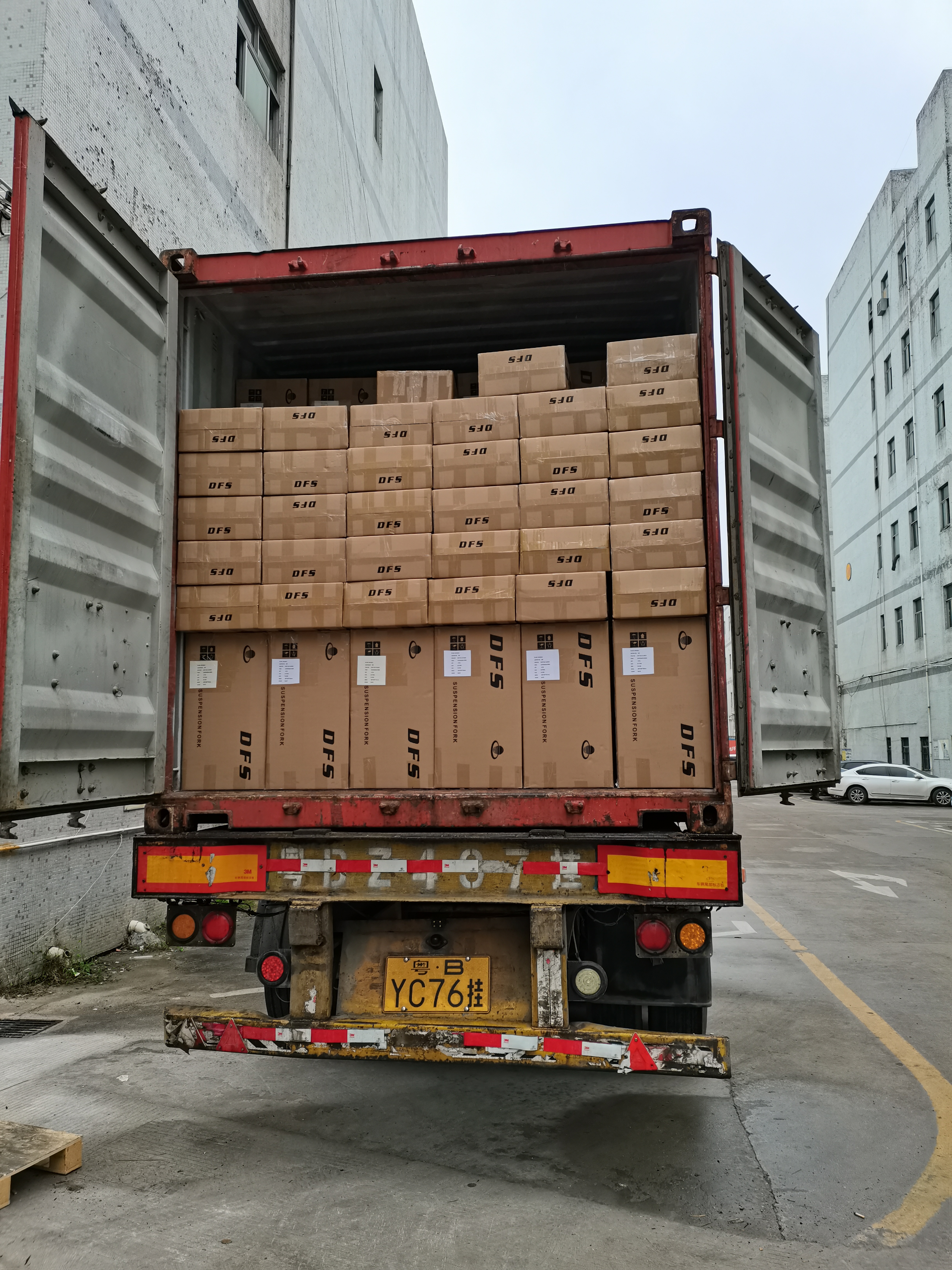
Order fulfilment: DFS air suspension forks tested and packed for export.
Have Questions or Need More Details?
Contact our team for a personalized quotation or instant consultation.
Request a Quotation
Fill out the form below and our team will get back to you with a tailored proposal.
WhatsApp Direct Chat
Prefer to chat in real-time? Message us on WhatsApp for instant assistance & quick answers.
- Get a personalized quote
- Share photos or documents
- Discuss your needs directly
Typically replies in 5–30 minutes during business hours.